The shift

Your data knows more than your spreadsheet shows.

You have years of records. Orders, jobs, visits, readings. Somewhere in there is the answer to a question you keep asking. What happens next? How much? How soon? A spreadsheet can add it up. It can’t learn from it.

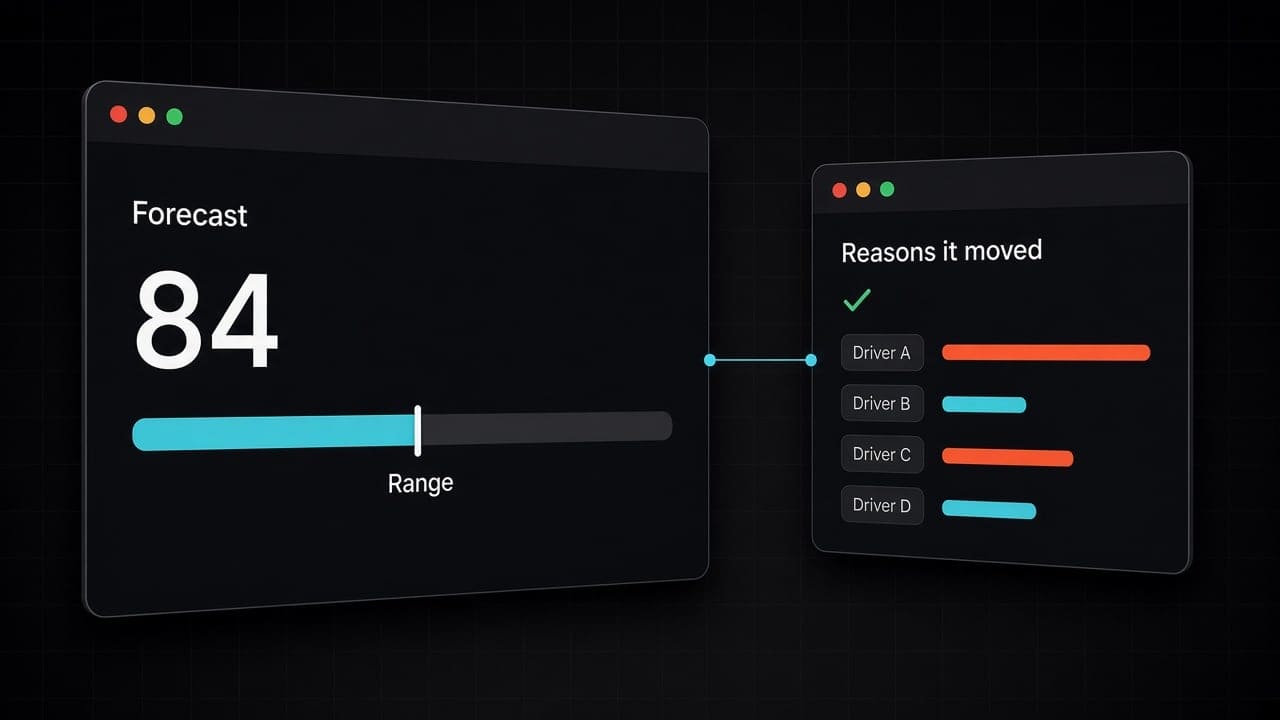
Many AI tools hand you a number with no reason. That is hard to trust, and harder to explain to a customer. We build models that learn from your own data, show their working, and say how sure they are. When the data is thin, they say so.

The outcome

What you get

Where it earns its keep

Use cases

  • What a customer can expect

    Turn a customer’s own history into a clear estimate they can plan around, the way PIRX gives a runner a Projected Time.

  • What is coming next

    Spot the pattern in past jobs or orders, so you can plan people and stock before the busy weeks.

  • Which ones need a look

    Flag the records that look off, with the reason, so a person checks those first.

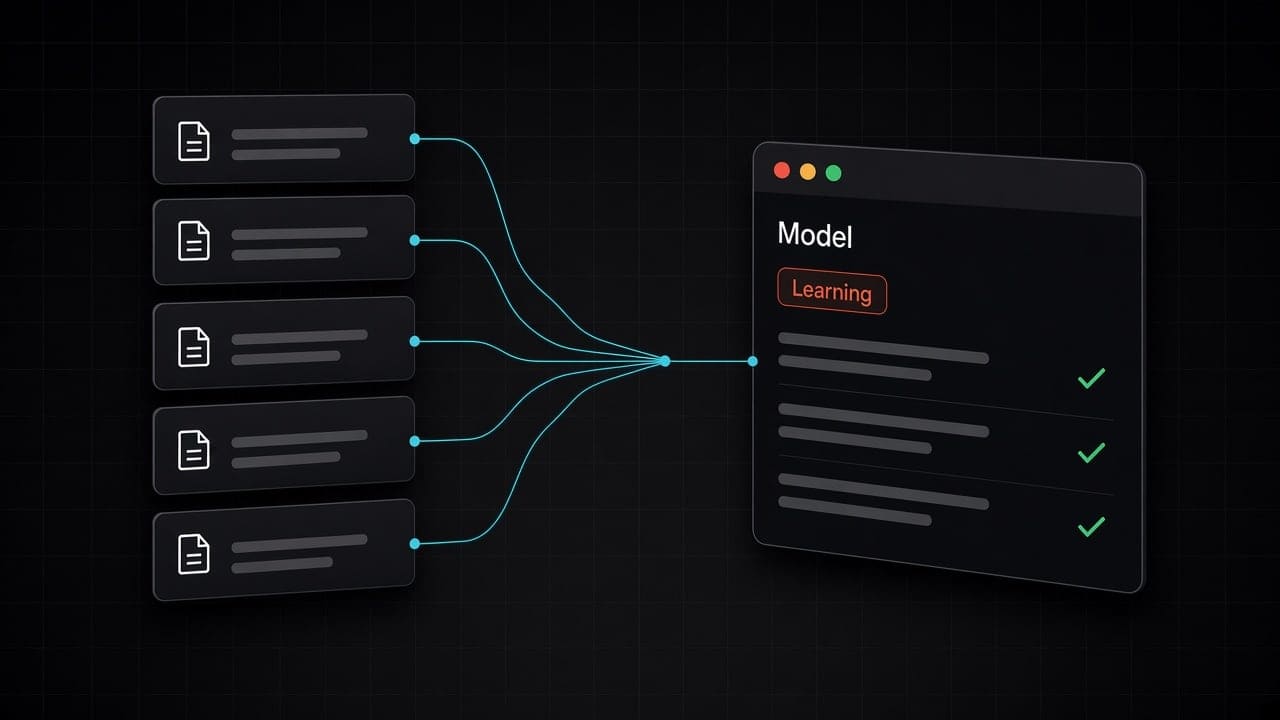
Five record cards with lines running into a model panel that is learning, each row checked.

The model lives inside the app

The model is part of the product, not a report on the side. Your team and your customers see the number, the range and the reasons where they already work. We build the app around it too. See how we build apps

The operating model

How it works

From first conversation to a system that runs itself.

  1. Plan

    We map how the work gets done today, including the calls only a person should make, and agree on it before anything is built.

  2. Build

    Built to run where your data lives and connected to the tools you already use, so nothing has to move.

  3. Review

    Tested on your real work from last week before any customer sees it.

  4. Launch and run

    We launch with close monitoring, keep it running, and you can change the rules at any time. It’s yours to keep.

The decision

How it compares

A spreadsheet, a data hire, and a model built into your app answer different questions.

Off the shelfHire in-houseAbracadabra
What you getA total or a trend line someone has to read.A report, when the person has time.A number, a range and the reasons, inside the app you use.
When the data is thinIt shows a number anyway.It depends on the person.The range gets wider and the app says the data is thin.
Who can check itWhoever wrote the formula.The person who built the model.Anyone. Each part of the number is shown.
When you don’t need usIf a simple average answers the question, keep the spreadsheet.Hire a data person when you need new research every week, not one product.Our advice: start simple. Machine learning earns its place when you have history to learn from and a question you ask every day.

Named work

Proof

pirx.ca

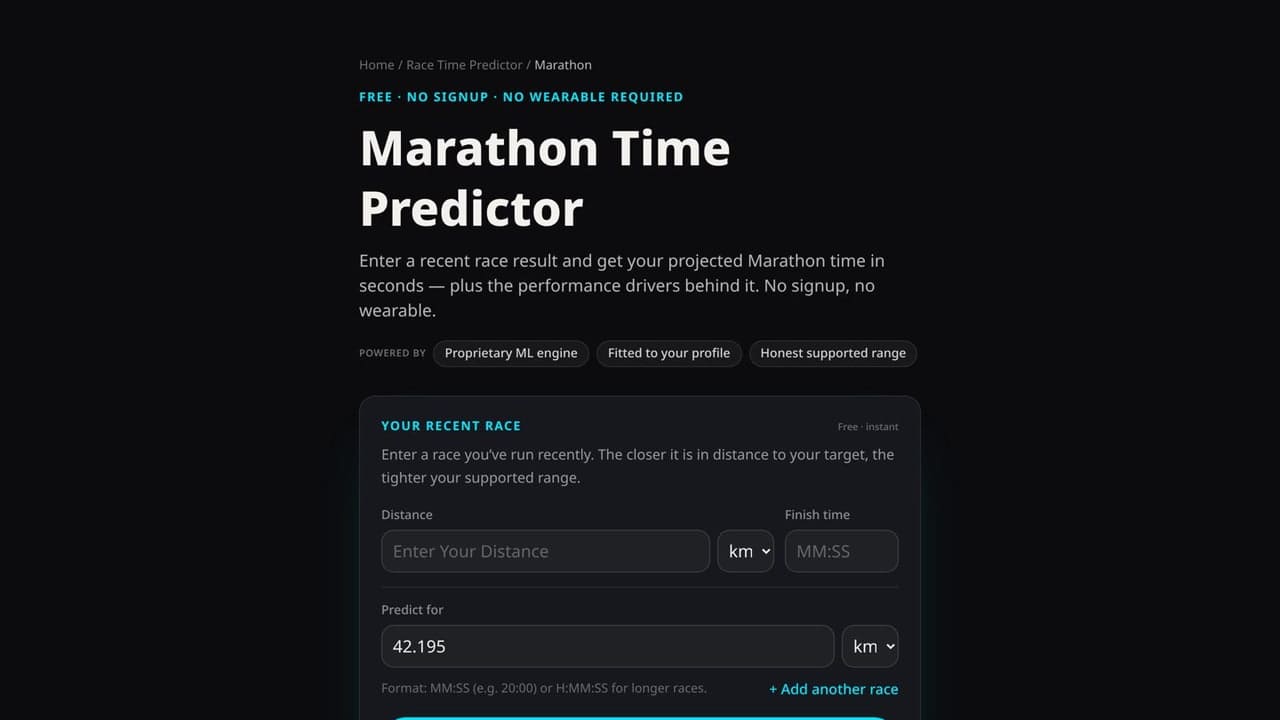
We designed and built the PIRX app and its machine learning. A runner connects the watch they already wear. PIRX gives a Projected Time for a race, a Supported Range around it, and the seconds each of five Structural Drivers adds: Aerobic Base, Threshold Density, Speed Exposure, Running Economy and Load Consistency. Personal models, including gradient boosting, learn each runner’s own patterns as their history grows. They are only used when they beat the app’s safe rules.
Read the pirx.ca case study

The PIRX marathon time predictor on pirx.ca, with a form for a recent race and notes on its machine learning engine and supported range.

Running in production today.

Pricing

Priced to the project. Tell us what you need and we’ll quote it.

Start a project

Questions, answered

FAQ

faq-title

How much data do we need?

Enough history to learn from. We look at what you have first. If it is too thin, we tell you, and we start with simple rules instead.

Will the model make things up?

It works only from your data. When the data is thin or odd, the range gets wider and the app says so.

Can we see why a number changed?

Yes. Each number is split into the parts that moved it, in plain words.

What if a model gets it wrong?

A new model is tested against safe rules first. If it does worse, or gives an odd answer, the app goes back to the rules.

Who owns the data and the model?

You do. The data stays yours, and so does what we build on it.

What does it cost?

Priced to the project. Tell us what you need and we’ll quote it.

Start a project

Tell us the question you wish your data could answer, and we’ll show you what a model could do with it.

Start a projectAI Readiness Check